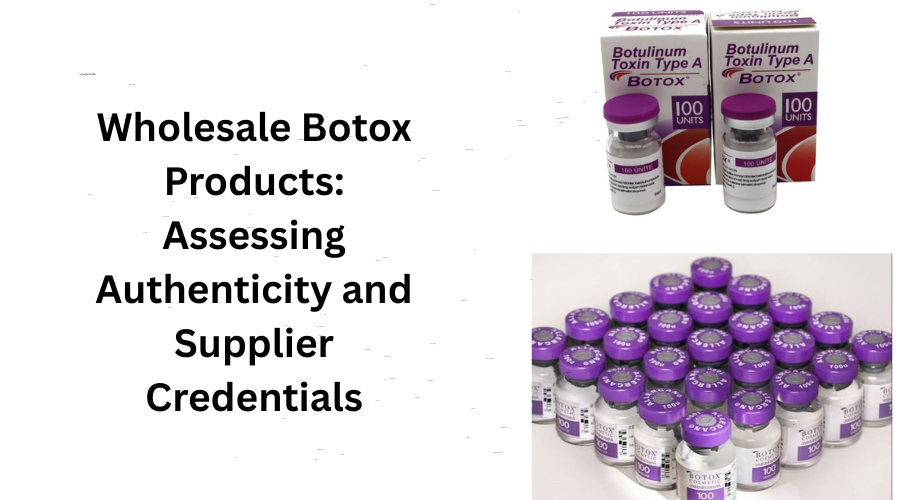
For owners of medical spas and clinical purchasing managers, confirming wholesale Botox status is a regulatory and patient-safety requirement, not just a buying task. All orders must include a verifiable source and documentation to support the authenticity of the product.
Numerous clinics have verification procedures that are either too lenient, or the staff shows much negligence in implementing adequate traceability and verification protocols. Every year this negligence is highlighted through various incidents that jeopardize patient health.
The one in April 2024 when the U.S. FDA reported that counterfeit Botox caused allergic reactions in patients. Some of the reactions were serious enough to require hospitalization.
Another case was revealed in November 2025, when the FDA issued 18 warning letters to websites illegally marketing unapproved products with botulinum toxin. These are only two examples, and many such incidents happen each year.
That is why supplier verification must happen before purchase approval. If a product is counterfeit or not legally marketed for the intended use, your clinic will have incidents that will result in patient harm. Your Botox shipments will get stopped for regulatory scrutiny and your reputation as a clinic will suffer because of these.
Verifying the state and federal license of a Botox supplier is the first step. You must start by confirming that the supplier is legally authorized to distribute prescription drugs. In the United States, check the relevant state licensing authority that matches with the active Wholesale Drug Distributor (WDD) license of the Botox supplier.
The FDA also recommends checking state licensure and its annual reporting database. But just because the botox supplier's name is in the database is not enough to establish that a business holds every required license or complies with all applicable regulations.
To confirm this you must request the supplier's legal registration details and relevant authorization records. Compare these details with the information in official databases.
If you are sourcing aesthetic products from international suppliers, make sure to assess the applicable Wholesale Distribution Authorisation (WDA) and Good Distribution Practice (GDP) requirements in the relevant jurisdiction. These credentials will tell you that the supplier is regulated by the necessary authorities. But these authorisations are still not a guarantee that a company is permitted to distribute prescription medicines in the United States.
Legal license establishes whether a distributor is authorized and legally registered. But traceability is just as important because it helps establish where the product came from.
Under the U.S. DSCSA, applicable trading partners must meet prescription-drug tracing and verification requirements. As a cosmetic clinic your job is to request and review the applicable electronic transaction documentation, including:
-Transaction Information (TI). Details identifying the product and transaction.
-Transaction History (TH). The applicable history of transactions as required by law.
-Transaction Statement (TS). The trading partner's required statement concerning the transaction and its compliance.
For understanding the details and exceptions, you should also consult FDA FDA DSCSA tracing requirements policy.
It is vital to perform these checks because packaging alone cannot establish a product's full distribution history. A carton may have entered the supply chain through an unauthorized channel. To avoid such risks, match the documentation to the supplier, invoice, and received inventory before releasing the order for clinical use.
BOTOX Cosmetic labelling specifies refrigerated storage at 2°C to 8°C (36°F to 46°F) for unopened vials. Your receiving procedure should therefore establish whether the shipment remained within the product's required storage conditions. These are part of the FDA labelling requirements.
Before accepting a wholesale Botox shipment, your SOPs should include requesting the supplier's shipping procedure and available temperature-monitoring records. The first check should be done during order pacemeent stage. This involves verifying labelling requirements to confirm that the packaging is suitable for refrigerated pharmaceutical transport or not. and that the monitoring information covers the relevant transit period.
The second labeling check should be done when order is being received. Here you must inspect the temperature indicator or data logger, packaging condition, and available records. If the shipment has an incomplete temperature record quarantine it pending review by the appropriate pharmacy, clinical, or quality lead.
Documented temperature data is more useful than a supplier's verbal assurance.
Physical Authenticity: A Six-Point Carton and Vial Inspection Protocol
|
Inspection Point |
What to Check |
Warning Signs |
|
1. Packaging |
Print clear. Info steady. Box intact. |
Misspellings. Blurs. Tears. Wrong labels. |
|
2. Name & Label |
Match product, dose, maker. |
Wrong name. Wrong strength. Missing data. Odd format. |
|
3. Lot Number |
Lot must match carton and vial. |
Missing. Altered. Mismatched. |
|
4. Expiry Date |
Date valid. Shelf life holds. |
Expired. Changed. Odd format. |
|
5. Seals |
Seal tight. No tamper. |
Broken. Punctured. Residue. Repacked. |
|
6. Vial & Product |
Vial sound. Product looks right. |
Cracks. Leaks. Discolor. Off‑spec. |
During sourcing Botox it is important to remember one crucial fact that a product's authenticity in one jurisdiction does not establish that its importation or distribution is lawful in another.
For U.S. clinics, an overseas aesthetic products supplier's claim that a product is genuine does not establish that the product is approved for U.S. marketing or legally eligible for importation.
Grey-market sourcing create three major problems.
First, clinics and med spas are not be able to verify every handling point. Missing temperature records or undocumented transfers leave uncertainty about storage conditions.
Second, manufacturer support, and product guarantees, depend on the product, distribution route, and policy terms which grey market supply channels lack. A common mistake many clinic procurement professionals make is assuming that a genuine-looking product purchased through an unauthorized channel has the same guarantees as inventory purchased through an authorized distributor.
Thirdly, unauthorized importation or distribution exposes a clinic or supplier to regulatory action where applicable law is violated. Misbranding and unlawful distribution carry serious consequences.
So just because you are making procurement savings in sourcing a product is no guarantee that the bulk order will not get seized. If the supplier cannot establish a credible chain of custody, the purchase should not proceed merely because the price is competitive.
If you are surcing Botox at large scale, you need to have adequate protocols in place for product verification. First step is to assign responsibility for receiving refrigerated products. At delivery point the staff should document the arrival time, package condition, and available temperature-monitoring results.
Two designated staff members must independently verify the shipment for a double-check. One staff memeber should verify the physical botox item. The other must check the invoice details and documentation.
Both staff members should record their findings and sign the intake record. This creates an auditable record.
In the event that unresolved or suspect products are found you must seperate them in a clearly identified, access-controlled quarantine area under appropriate storage conditions. Do not release them for treatment while these issues remain unresolved.
Release inventory only after the designated reviewer has documented the necessary checks.
If your clinical staff suspects counterfeit product, stop distribution and use. The adequate systematic way to deal with such a problem is to Preserve the packaging, vial, shipping records, and relevant communications. Notify the manufacturer through an independently verified channel and follow applicable reporting requirements.
In the United States, suspected criminal activity involving drug products can be reported through the FDA's Office of Criminal Investigations Your job will be to follow current FDA instructions for the relevant reporting of discrepancies and fake products
Reliable wholesale Botox procurement requires more than a supplier invoice and an intact carton. You need to have a solid supplier vetting and prdouct verification policies in place to ensure that every batch of Botox you receive is authentic. The practical way to ensure that you do not receive fake products is fairly simple but not that easy to omplement. It involves verifying the supplier, inspecting the product, reconciling the records, and quarantining unresolved inventory. A consistent verification process protects patients while giving your clinic a stronger basis for regulatory compliance and purchasing decisions.
For owners of medical spas and clinical purchasing managers, confirming
READ FULLHighlights Certificates and batch records are more important than price list. Wholesale
READ FULLPDO threads selection is not simply a matter of compa
READ FULL