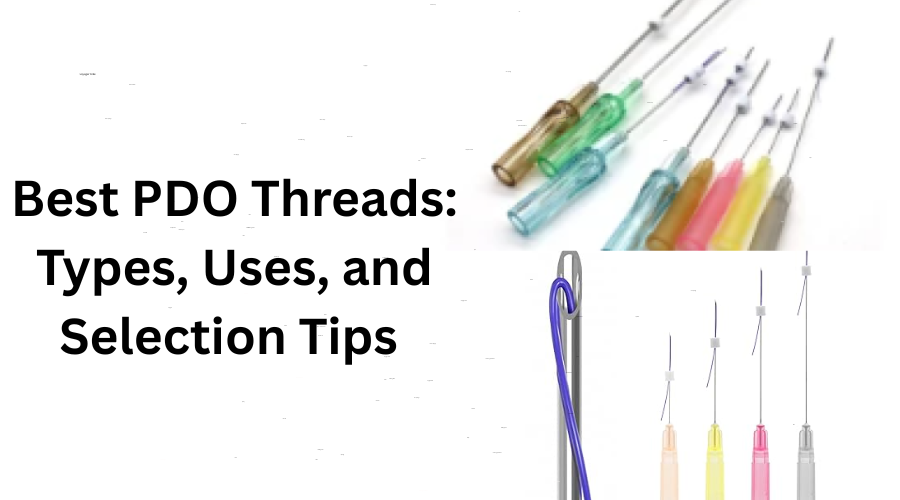
PDO threads selection is not simply a matter of comparing product specifications or selecting a popular brand. These aesthetic enhancement tools are available in numerous brands and consist of several types. For aesthetic practitioners and clinic owners choosing the right one is not a simple decision. The correct thread choice should balance treatment goals, patient suitability, thread design, and clinical expertise. A product that works well for one treatment may be unsuitable for another.
This difference matters even more when evaluating the best PDO threads for face lift procedures. Different thread configurations serve different purposes, and the winning combination is how well the product matches the patient's anatomy and the practitioner's treatment plan.
PDO, or polydioxanone, is a biodegradable synthetic polymer used to manufacture absorbable threads for various medical and aesthetic applications. In aesthetic procedures, PDO threads are inserted beneath the skin by qualified practitioners to support tissue repositioning or provide a framework associated with collagen stimulation.
A successful treatment result depends on the thread's configuration and placement. Some pdo threads are designed primarily to support subtle improvements in skin texture and firmness. Others have structural features that is intended to engage tissue and create a lifting effect.
PDO threads are not interchangeable and different treatments require different kind of threads. The PDO thread's design is not the only thing that matters. Threads' thickness, insertion method, and placement also influence how effective they are. A thread selected for one facial area may not provide the appropriate support or lifting effect in another area.
Patient's skin type is equally important. Common skin characteristics that affect PDO thread effective includes skin laxity, tissue thickness, and facial anatomy. Practitioners must assess these factors before choosing a product or proceeding with treatment.
For clinics, the selection of pdo thread should start from clinical requirements, not from supplier promotion claims. When you have a clear grasp of the intended application, it is easier to determine whether the specifications of the thread are consistent with the treatment plan.
PDO threads come in a variety of configurations. Understanding the structural differences between them helps practitioners to differentiate between products that look similar in a catalog but have a different treatment purpose.
Smooth PDO threads have a simple surface and do not have the barbs or cogs used to catch tissue for physical lifting. They are often used for esthetic procedures aiming at gentle improvements in skin quality and collagen stimulation.
Smooth threads are quite different from lifting threads. Although smooth threads support improvements in skin firmness over time, they do not have the caapbility to lift the tissue like barbed or cog threads.
Smooth surface of a smooth pdo thread is a suitable option for treatment plans where a practitioner wants to improve skin quality without relying on tissue-gripping structures. The exact way the smooth thread is inserted depends on the product's design and the practitioner's assessment.
Barbed or cog PDO threads have small projections on their surface like a barbed wire which is designed to engage surrounding tissue. This structure allows the enhancement professional to reposition or support tissue mechanically, making these threads relevant to selected lifting-focused procedures.
However, the presence of barbs or cogs does not automatically make one kind if pdo thread superior to another. Performance depends on factors such as thread design, barb positioning and material specifications.
Practitioner expertise is placement and selection of pdo threads is particularly important. If incorrect cog or barbed pdo thread is selected and is improperly placed the inevitable result will be complications such as skin dimpling, visible threads, or tissue irregularities. In documented clinical cases improper placement of thread also results in temporary swelling and bruising.
Cosmetic clinics should therefore evaluate these products with attention to both their intended lifting function and the training required for their appropriate use.
When procuring these pdo threads from suppliers, due diligence should be practiced because these are sensitive clinical products. Make sure to confirm technical specifications, product documentation, and instructions for use of a particular pdo thread brand before ordering in bulk.
Screw and multi-thread configurations offer alternatives to single smooth threads. Screw threads generally use a twisted arrangement.
Multi-thread products incorporate multiple strands or a more complex configuration within the product design.
Such threads should be chosen for specific esthetic use according to the treatment plan of the practitioner. But the actual features and purposes can vary quite a bit from product line to product line.
A common mistake many clinics make is stocking products with similar names that have identical properties. One manufacturer's screw thread may differ from another's in strand arrangement, dimensions, material specifications, or intended application.
Here, the level of scrutiny is especially important when expanding a clinic's treatment portfolio. A product that appears suitable on paper still needs to meet the clinical and operational requirements of your practice.
Smooth PDO Threads vs. Barbed or Cog PDO Threads
|
Comparison Factor |
Smooth PDO Threads |
Barbed or Cog PDO Threads |
|
Design |
Smooth surface without barbs or cogs |
Projections designed to engage surrounding tissue |
|
Primary Function |
Supports skin-quality improvements and collagen stimulation |
Supports mechanical tissue engagement and lifting |
|
Lifting Mechanism |
Does not use barbs to grip and reposition tissue |
Uses barbs or cogs to engage and reposition tissue |
|
Typical Treatment Goals |
Selected skin-quality and firmness-focused treatments |
Selected facial lifting and tissue-repositioning procedures |
|
Key Selection Factor |
Intended application and product specifications |
Lifting requirements, tissue characteristics, and practitioner expertise |
|
Important Consideration |
Do not expect the same mechanical lifting effect as barbed threads |
Suitability depends on the patient's anatomy, thread design, and practitioner technique |
The best PDO threads for face lift procedures are those whose design, and specifications, match with the patient's anatomy and the practitioner's treatment plan. For lifting-focused procedures, practitioners commonly choose barbed or cog threads because their projections are designed to lift the tissue.
However, selecting a lifting thread requires more than confirming that it has barbs. During selection it is important to inspect thread dimensions, and configuration. Moreover knowing about the patient's skin tissue characteristics and treatment area is also a
Before choosing a pdo thread, assess the following factors.
Treatment area: Different facial areas have different anatomical and tissue characteristics. A thread suitable for one area should not automatically be assumed appropriate for another.
Tissue characteristics: Skin tissue features usually include skin laxity, tissue thickness, and the amount of support required for placing the thread. So before treatment the practitioner must determine whether a thread-based approach is suitable for the individual patient.
Thread specifications: These involve a careful review of the thread material, configuration and dimensions to see if it is suitable for the selected treatment plan. Clinical professional should also confirm that the product documentation supports the proposed use.
Practitioner experience: Thread selection and placement require appropriate anatomical knowledge and procedural training. No matter how flawless the thread quality if the person using it is untrained the result would be unsatisfactory.
Regulatory status: Checking if the product is lawfully marketed for the intended use in your jurisdiction is something that is essential that should not be skipped. Registration, authorization, and documentation of PDO thread manufacturers vary by country, so verify the applicable local medical regulations is a must.
Without consistent comparative data, and a well-defined treatment context, it is not possible to say that one brand or product is the best choice for all practitioners and all patients. A defensible process of selection is worth more than an unqualified ranking.
Once you have evaluated the product specifications and clinical requirements, the next step is to match the thread configuration to the treatment goal and the type of enhanceemnt the patient wants.
For facial lifting: Practitioners usually considerbarbed or cog threads designed to engage tissue.
For selected skin-quality improvement: Smooth threads are a suitable option that is widely selected for addressing skin texture issues.
Screw and multi-thread options: Thuse are utilized in specialized treatments that vary from patient to patient.
The key is to avoid treating these options as interchangeable. A pdo product chosen primarily because it is inexpensive, or readily available will be a completely wrong choice for a particular
Here it is important to stress that individual patient assessment is the only way to know for sure which pdo thread will work. If a patient's goals, anatomy, or tissue characteristics make thread lifting unsuitable, choosing a different thread configuration does not solve the underlying problem. The practitioner should consider an appropriate alternative and explain realistic expectations.
Choosing the best PDO threads requires a clear understanding of not only the thread but the patient's skin as well. For enhancement professionals, the priority is matching the thread to the treatment goal while keeping in mind patient safety. A common mistake that inexperienced professionals make is to commit to a product based on its lifting claims alone. Thread specifications, intended use and the supporting documentation must be confirmed prior to placement.
For owners of medical spas and clinical purchasing managers, confirming
READ FULLHighlights Certificates and batch records are more important than price list. Wholesale
READ FULLPDO threads selection is not simply a matter of compa
READ FULL