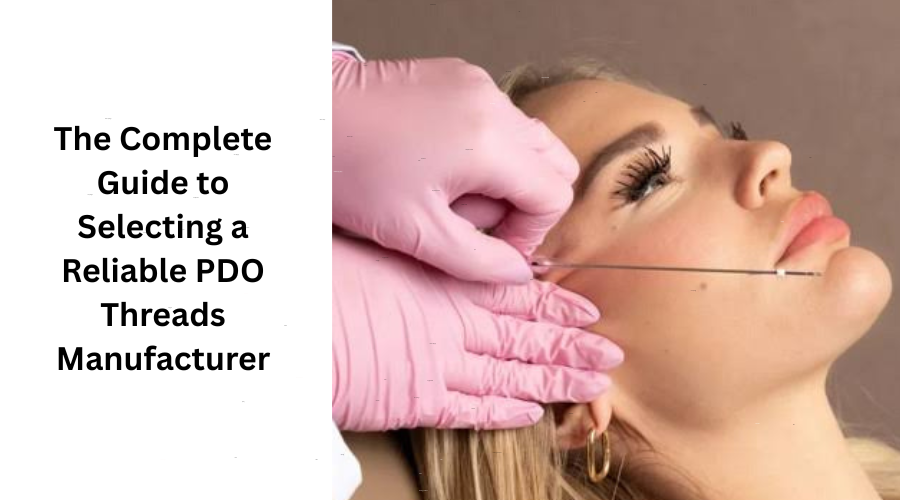
PDO threads are medical devices. A low price is not enough to convince buyers to buy them for clinics or distribution. This guide explains the most important certifications, manufacturing standards, and supplier checks to look at before ordering in bulk.
PDO threads are inserted into a patient's skin. Manufacturing flaws can also lead to infection, thread breakage, or non-uniform absorption rates. In most countries, they are classified as medical devices, rather than regular cosmetics.
As classified, manufacturers are subject to strict quality and sterility guidelines. Any supplier that skips out on sterilization or materials is risking compromising your clinic reputation and the safety of your patients.
PDO is a biodegradable polymer that has been used in surgical sutures for many years and has recently been utilized for thread lift therapy. PDO threads are absorbed within 4-6 months, so the material must be pure enough for predictable, safe absorption.
Ask your manufacturer where they source their polydioxanone raw material. A reliable manufacturer can list its raw-material suppliers and provide documentation showing it meets medical-grade purity standards.
The insertion and the result of a thread gauge impact. The gauge numbers of the standard gauges vary from 26G to 30G depending on the treatment area and the desired lifting effect. Ask your manufacturer about gauge tolerance, as different gauges insert at different depths and comfort levels for the patient.
ISO 13485 certification guaranties the manufacturer follows a quality management system tailored to the manufacturing of medical devices. The certification includes everything from the processing of raw materials to the final packaging. Apply directly and proactively for the certificate Renewal of certifications must be done regularly
The CE mark assure that the product conforms with medical device laws in the European Union. Manufacturers selling to the U.S. must clear or be approved by the FDA. Always check with your supplier that they are the right supplier for the right market, as not all manufacturers achieve every certification.
Good Manufacturing Practice includes all aspects of manufacturing, such as facility cleanliness, employee training, and process documentation. Ask about the manufacturer's GMP certification, as it may not be medical device-specific.
Ethylene oxide sterilization or gamma ray treatment are the most common methods used for PDO thread manufacturing. When properly validated, both methods effectively kill microbial contamination. Ask your manufacturer which method they use, and request validation documentation that provides proof of sterility assurance levels that comply with medical device standards.
Sterile Packaging needs to be well sealed until it reaches the end clinic. Ask about packaging material, sealing process, and expiry date. A sterile product may not be safe to use if the seal cannot be maintained throughout the distribution process.
The sharpness and uniformity of the needles. PDO threads are usually preloaded into cannulas or needles for insertion. This impacts patient comfort and insertion accuracy. Ask your manufacturer about their needle sourcing and quality-testing process, as poor needle quality can affect clinical results.
Sometimes, a blunt-tip cannula is utilized rather than sharp needles, bringing down the danger of actual injury in a few therapy regions. Clinics often need both types of delivery system, depending on the procedure and patient anatomy, and it's crucial to inform your manufacturer of what they have.
Manufacturers usually offer more than one thread type. Mono threads are appropriate for fine lines and improving skin texture. Cog or barbed threads can hold tightly at first when picking up prolonged-sagging tissue. The screw threads are frequently twisted or double-stranded, and focus on volume and texture in specific regions.
For clinics that require non-stop access to a variety of thread types, it is easier to source this availability from a manufacturer that handles all thread types.
Distributors and clinic networks that establish their own brand identity can get private-label packaging from some manufacturers. Find out minimum order quantities for private-label runs, which are generally higher than the standard minimums for other stock products.
Medical device manufacturing usually takes place under controlled conditions, most likely in a clean environment, to limit the risk of contamination. Check with your manufacturer for their cleanroom classification and if their company has independent auditing to ensure compliance with stated standards.
Request batch testing procedure : Tensile strength testing, Sterility testing for each batch . Full batch traceability means that in the event of a quality problem after distribution, the recall process can proceed smoothly.
Do you have any current ISO 13485, CE, or FDA documentation for this product line?
What sterilization method do you use, and do you have any validation data?
How do you test your batches, and do you have a Certificate of Analysis (COA)?
What is your raw material sourcing process for polydioxanone?
What is the lowest quantity you can order for private label packaging?
A solid manufacturer provides the appropriate documentation to address each question rather than fluffy assurances of quality.

Be careful of manufacturers who cannot furnish current certificate documents upon request. If a price is significantly low, be careful, as it may mean the materials have been cut, or necessary tests were not performed. Be wary of suppliers who refuse to provide batch-specific test data and sterilization validation documents. In addition, investigate manufacturers without business registration or physical facility information before making any bulk commitment.
The price rises as a result of the purity of raw materials, the sterilization validation, and maintenance of the PDO certificate. Instead of taking all quotes as being equal, the buyer should find out why some quotes are more expensive than others.
Many manufacturers are willing to charge different rates depending on the quantity of orders placed. Ask about discounts for larger orders and whether you sacrifice order-volume flexibility by entering into longer-term supplier agreements.
PDO threads typically do not require cold chain shipping as some injectable products do. There may be recommended temperature ranges from the manufacturers to maintain packaging integrity and material properties. Ask the manufacturer about any special storage requirements.
Be sure to have the right paperwork to bring medical devices into the destination country. This often includes a Certificate of Free Sale, product registrations and import permits for medical devices in the target market.
Once you have found a manufacturer that meets your certification, quality and documentation requirements, you are good for consistency. A good relationship is established and the problems of re-ordering are lessened. It can often assist in scheduling production in busy periods.
Check your manufacturer's certification status from time to time because certifications have to be renewed and regulations can change. An annual inspection helps your business avoid working with an out-of-compliance manufacturer.
Some buyers are purchasing the products from local distributors rather than from the manufacturers directly. Distributors may have lower minimums and local support, but buyers should check the distributor’s authorization from the manufacturer and documentation standards throughout the supply chain.
Direct manufacturer relationships tend to provide better traceability and, at higher volumes, better pricing, but may require a higher minimum order commitment.
Choosing a PDO manufacturer is more diligent than it is for other product manufacturing because PDOs are a medical device that is applied directly to patients. Check for certifications before placing any order for bulk supplies, validate sterilization, and perform batch traceability. This careful consideration helps protect your practice's reputation and your patients' confidence in a safe, properly produced product.
Where to Purchase PDO Threads Online?
You can purchase them from a trusted vendor, a verified medical device trade platform, or directly from the manufacturers with documented medical certificates.
Which supplier should I go with for PDO threads?
Before placing a bulk order, ask for documentation of ISO 13485, CE or FDA certification, sterilization validation, and batch testing.
Where can I get PDO threads for my clinic or retail store?
Collaborate with a manufacturer that provides all certification documents and clear batch traceability for each order.
What are the requirements for a good PDO thread manufacturer certificate?
Check for ISO 13485 certification, CE marking, and FDA clearance applicable to the intended country.
How can I test a PDO thread manufacturer's sterilization?
Request validation data for sterility and sterility assurance level for their production process.
Highlights -PDO threads are absorbable sutu
READ FULLHighlights -PDO threads are dissolvable sutures for skin lifting. -They work by
READ FULLA trustworthy manufacturer of PDO threads offers CE a
READ FULL