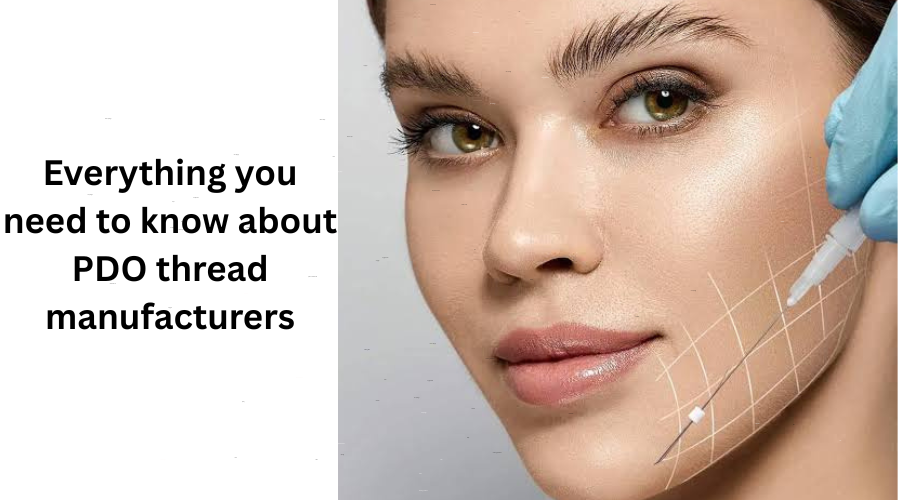
PDO threads are absorbable sutures used in thread lifting.
A competent manufacturer of PDO thread should have CE, ISO 13485, or FDA clearance.
There are three types of threads: mono, cog, and screw, and they are all used in different treatments.
Bulk buyers should ask about the gauge range, thread length, and packing sterility.
You need to source them from Korean or Chinese factories, which involves MOQ, lead time, and certification checks.
PDO threads have now been part of the aesthetic medicine supply chain. Safety requirements are tight for clinics or distributors, and they need reliable sourcing partners. In this guide, we will discuss what a buyer needs to know before purchasing from a manufacturer of PDO threads. It covers thread types and certifications, guides you through the sourcing process, and answers frequently asked questions from suppliers.
PDO threads are fix in position and lift skin without surgery. The polydioxanone material gradually dissolves over time, usually in about 6-8 months, promoting collagen regrowth. They are used by clinics for the face, neck and jaw line. Common procedures are brow lifts, correction of the nasolabial fold and jowl tightening PDO threads are available in different gages, from 27G to 30G, depending on the area being treated.
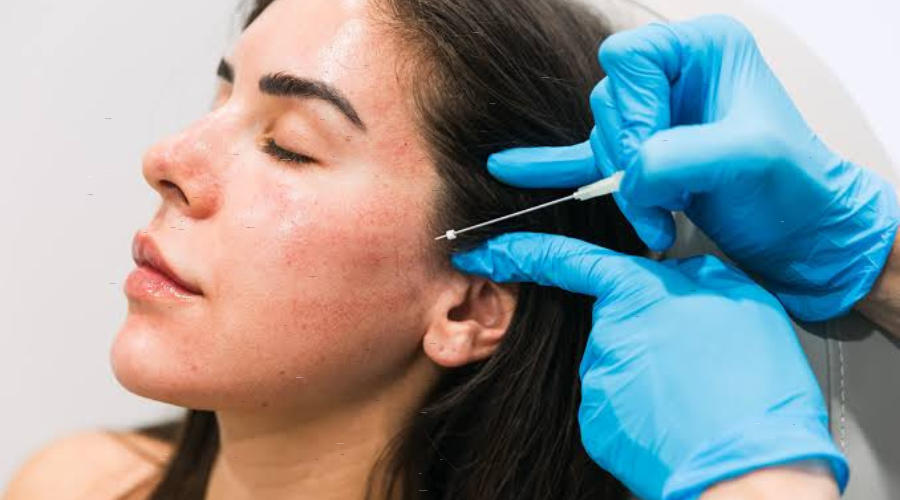
PDO threads provide mechanical lifting when they are injected underneath the skin. This material induces a low-grade inflammatory reaction. This response increases fibroblast activity and collagen synthesis. Skin softness and firmness increase in 3-6 months. The thread disappears entirely after 180-240 days, with no lasting implant left to harm them.
Buyers need to know three main categories of threads before ordering:
Mono threads- Single-strand threads for fine line reduction and skin texture enhancements.
Cog threads- barbed threads that can create a stronger lifting effect in saggy areas.
Screw threads- twisted double or triple strands for volume in cheeks and mid-face.
Several types are best for different clinical purposes. The wholesaler should carry a variety to meet clients' needs.
A dependable manufacturer exhibits the following certificates and production information. Check for CE Marking in conjunction with MDR 2017/745, ISO 13485 quality management system certification, and, if applicable, KFDA/FDA clearance. Speak directly with manufacturers’ certifier numbers. Verify with the issuer's database. Do not deal with suppliers who cannot provide accurate information and evidence of how to trace raw materials and sterilizing batches.
The top three certifications are most important to B2B buyers. ISO 13485:2016 is validation that the manufacturer adheres to medical device quality standards. CE certification means it can be sold across the EU market (in Europe). Gamma or EO sterilization validation ensures the sterility assurance level (SAL) of each batch is less than 10⁻⁶. Request a validation report for the sterilizer with every bulk order.
Medical-grade polydioxanone resin is the initial step in the manufacturing process. The resin is extruded into a fine filament under controlled tension. Filaments are cut to a precise length of 25mm, 50 mm, or 100 mm, depending on the thread type. Barbed variants go through a cogging process, which scores barbs in the direction of use. Cannulas or needles are then loaded with threads that have been sealed and sterilized before packaging.
Packaging needs to remain sterile until the time of use. All threads should be packaged in a separate peel-open pouch. Boxes are usually sold in packs of 10 units, but industrial wholesale orders can vary. Buyers should check the expiration dates, which are usually 2–3 years after manufacture, clearly stamped on the pouch and the outer carton.
The minimum order quantities will depend on the manufacturer's size and threads. Normally, the minimum order for new B2B accounts is 500 to 5,000 units per SKU. Repeat customers usually find that the MOQs will be lower. Standard orders have a lead time of 15 to 30 days, with up to 45 days for custom gauge or private-label production. Always validate lead time in writing before making a deposit.
Korea and China, with their experience in medical device production, drive the global PDO thread industry. Korean manufacturers have high recognition and KFDA support, which attracts premium clinic markets. Chinese manufacturers usually have lower "per unit" prices, with flexible private label contracts. When choosing sourcing regions, buyers need to consider brand reputation as well as price.
Price is determined by thread type, gauge, and order quantity. Mono threads are sold at bulk costs of $0.15 to $0.40 per thread. Cog threads cost more ($1.00 – $1.20 per unit) because of the cogging process. The unit price of screw threads ranges between $0.60 and $1.50. Generally, the price reduces by 10–20% for orders of more than 10,000 units.
When buying from a new supplier ask for 3 things, 1) 3rd party lab test reports for tensile strength & absorption rate. Second, request samples for internal quality testing. Third, check the manufacturer’s export experience from the trade platform or customer references. This helps to reduce the risk before the first big order.
The most frequently encountered defects are thread size variation, poor barb control, and early material deterioration. Diameter differences can cause unequal lift in clinical use. Weaker barbs have lower lifting capacity and increase migration risk. If premature degradation occurs, the thread's useful life is shorter than the normal 6 months. Individuals should try each new batch of product before offering it to clinics.
PDO threads are one of the continually growing segments of the market for aesthetic devices. Sourcing risk is significantly minimized if buyers seek manufacturers that are certified, document their process clearly, and provide samples for testing. A well-established supplier relationship based on these checks leads to uniformity in product quality of all bulk orders.
Are there any custom PDO threads providers who offer low rates?
Order discounts are available with many manufacturers, who are able to start with 5,000 or larger volumes. Typical custom options include gauge, length, and exclusive branding packages. Before making a price comparison, request a volume discount chart from each shortlisted supplier.
Where can I find a wholesaler of PDO threads with customization options?
Wholesalers of custom gauges and branded packaging may be available on B2B sites such as Alibaba, Global Sources, or Made-in-China. Companies that sell directly on their websites are often more flexible with customization than trading companies. Before finalizing a custom bulk order, ALWAYS ask for a sample package.
What certifications should I look for when choosing a supplier of PDO threads?
At least under MDR 2017/745, look for ISO 13485 quality certification and CE marking. For buyers interested in the US or Korean market, FDA or KFDA clearance will boost their credibility. Request certificate numbers, then check them against the issuing body's public database.
How can I verify the manufacturer of PDO threads before ordering in bulk?
Request third party lab test reports on tensile strength and purity of material. Ask for references or correspondence from past clients who have bought from the B2B exporter. A factory audit report – even a remote one – builds confidence before a large deposit.
How can I check the manufacturer of PDO threads before ordering the product in bulk?
Request third party lab test reports on tensile strength and purity of material. Request references or correspondence from past buyers who purchased from the B2B exporter. A factory audit report, even if done remotely, helps build confidence before making a large deposit.
For owners of medical spas and clinical purchasing managers, confirming
READ FULLHighlights Certificates and batch records are more important than price list. Wholesale
READ FULLPDO threads selection is not simply a matter of compa
READ FULL