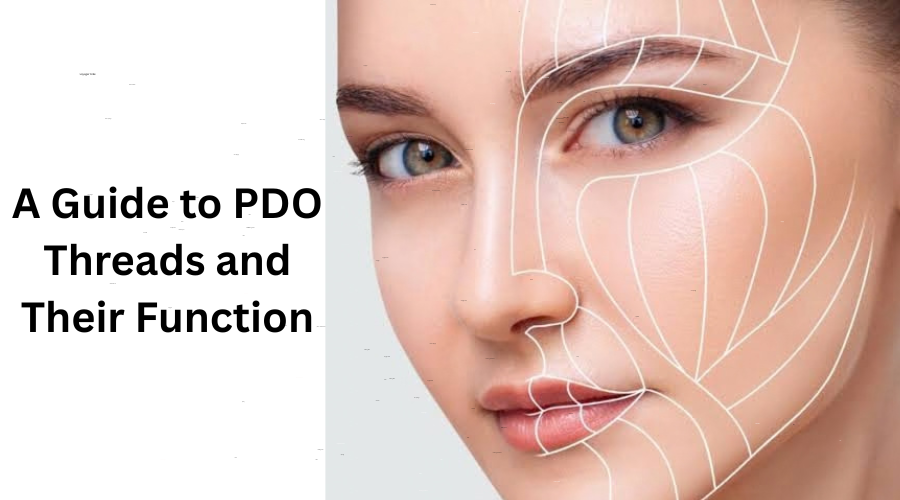
-PDO threads are dissolvable sutures for skin lifting.
-They work by mechanical lifting and stimulation of collagen.
-Common forms are mono , cog and screw threads .
-Usually, the results last from 6 to 18 months.
-Treatment takes 30 to 60 minutes with local anesthesia.
PDO facial lifting has become one of the most popular facial cosmetic procedures. Doctors in clinics use it to lift sagging skin without incisions. Patients appreciate the short recovery times. However, many still ask a question that is very basic: “What are all these threads doing under the skin?” This guide will outline what PDO threads are composed of, how they lift and tighten skin, and the results patients can reasonably expect to see.
PDO stands for polydioxanone. It's a synthetic, biodegradable polymer that has been used in surgical sutures for decades. It has been used by surgeons for a long time before the aesthetic industry started using it for lifting. Over time, the material breaks down easily and safely in the body, which is what makes it useful here. Polydioxanone was originally designed for internal stitches in surgery in the 1980s. As soon as practitioners investigated non-surgical cosmetic lifting techniques in the early 2000s, it became the obvious choice for use. That's one of the reasons regulators approved it for use on the skin.
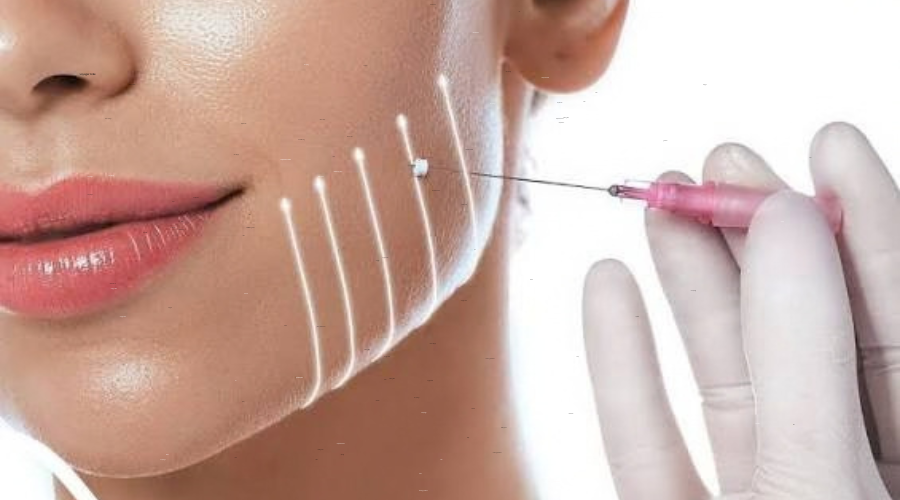
There are two ways the lift takes place; the first is a mechanical effect. Once it is found at the correct angle and depth, it will draw and move the loose tissue. The barbed threads are pushed into the deeper layers of skin and then manipulated, lifted, and moved, usually along the jawline, cheeks, and neck. Second, it has a biological effect, continuing for the following couple of weeks. The cells see the thread as an innocent bystander and respond by building new collagen around it. This is an active collagen reaction, which continues for months after most of the mechanical lift is gone, which may result in delayed, appreciating results.
Not all PDO threads are the same. Mono threads consist of one smooth thread. They promote collagen production and stimulate skin texture, with little to no lift. They are used in the clinic for fine lines and skin quality in general, usually in the area around the eyes and lips. Cog threads contain small barbs. These barbs lift tissue to the surface, hence the use of cog threads for lifts for the jawline and cheek area. Screw threads are twisted around a needle in the form of a spiral. They volumize, not lift, in the hollows like temples or nasolabial folds.
Treatments with different goals employ different threads. Gauges generally range from 26G to 30G, with smaller gauges used under the eyes. Length ranges from 25mm to 100mm or longer, depending on the area being lifted and the surgeon's skill. Gauge and length are selected according to the depth of tissue to be treated. The placement depth is as important to show as any thread. Cog threads are in the subcuticular space 2 to 4mm below the skin surface. If too shallow, then it can show through or form dimples. If it is too deep, it ceases to hold the tissue to be repositioned.
The threads dissolve in 4-6 months. However, the collagen they stimulate keeps boosting the skin's health long after that. Patients notice an improvement of 6-18 months, with the higher range occurring with cog threads because of their stronger mechanical grip.
Producing collagen does not happen in an instant. Mechanical lift can be seen right after treatment. Around weeks 2 to 4, the body produces new collagen fibers in response to the thread. Peak collagen levels occur from month 3 to month 6, and this is when patient feedback indicates the skin feels the firmest. This is because there is a time lag between when treatment begins and when final results can be observed. Therefore, it is recommended to wait at least three months before assessing final results. There may be swelling and less restriction initially due to the procedure itself, which can cover up the actual results for the first few weeks. A viewing at 3 months determines the effectiveness of the treatment.
A wrinkled face, but not severe, is the ideal condition for candidates. The best results are seen in patients between the ages of 30 and mid-50s. Major weight loss typically leads to excess skin that requires surgical intervention. A consultation with skin assessment determines true candidacy.
For decades, PDO threads have been used in surgery, which makes them well documented for safety. Mild soreness at insertion sites, swelling, and bruising are common side effects but can go away within a week. Other, less common problems include thread migration, which can cause visible puckering or infection at entry sites. These affect about 1 to 3 percent of cases, respectively, based on published clinical evidence.
A good and experienced practitioner minimizes these risks. The process of thread placement has a greater influence on the outcome than the brand of the thread. When booking an appointment, ask about the practitioner's training hours and how many cases they have performed.
Surgical facelift surgery involves excision of excess skin and permanent repositioning of the deeper tissues. PDO threads are an additive to your own skin and tissue . It is a less invasive, temporary alternative . Recovery from a facelift takes two to four weeks, but days for a thread procedure.
That’s why cost is such a critical factor. PDO threads usually cost between $800 and $3,000 depending on the number of threads used and the area being treated. A surgical facelift costs anywhere from $7,000 to $15,000, or more. If you want a subtle lift, threads are your friend, if you have more dramatic sagging you will be better off with a facelift.
Clinics that purchase PDO threads need to check the CE marking or FDA clearance based on the market. Reliable manufacturers can supply batch testing papers for their polymers, which ensure that polymer purity and absorption rate are uniform. Request a Certificate of Analysis with every purchase, not a product datasheet.
The sterilization method is also important. The certificate should include ethylene oxide sterilization for most PDO threads and indicate the results of sterility testing. Packaging should reflect an obvious date of manufacture (usually 2-3 years). With improperly stored or expired threads, they can lose their tensile strength before ever making it to a patient.
PDO threads stimulate collagen production while also providing immediate skin repositioning. The type, size, and progression of the thread can influence results, and usually these last from 6 to 18 months. Both clinics and patients will appreciate understanding of how it actually works, to set a reasonable expectation ahead of treatment being provided.
Where to buy PDO thread in bulk for clinics?
Licensed esthetic devices manufacturers sell in bulk to registered clinics and distributors and normally offer tiered pricing based on volume.
How much would PDO threads cost at wholesale?
Wholesale price usually ranges from $3 to $15 per thread, depending on the type, gauge, and order quantity.
Is there a custom supplier for PDO that offers certain gauge options?
Most custom treatment protocols can be satisfied by manufacturers that supply full gauge and length ranges from 26G to 30G and 25mm to 100mm.
Who offers bulk PDO threads with customization at discounted rates?
Custom bulk purchases of more than 500 units get 10% to 15% discounts from some suppliers.
How long is the shelf life of PDO threads after manufacture?
The shelf life for most PDO threads is 2-3 years from the production date when stored correctly.
Highlights -PDO threads are dissolvable sutures for skin lifting. -They work by
READ FULLA trustworthy manufacturer of PDO threads offers CE a
READ FULLWhat Do PDO Threads Do to a Patient or Applicant?
READ FULL