A good manufacturer of PDO thread has certifications, not just a catalog.
The thread type, gauge, and length determine the treatment.
Sterilization and batch testing help to prevent infections.
Each factory has different MOQ, lead time, and warranty applications.
Most problems come up first on a sample order and in the factory audit.
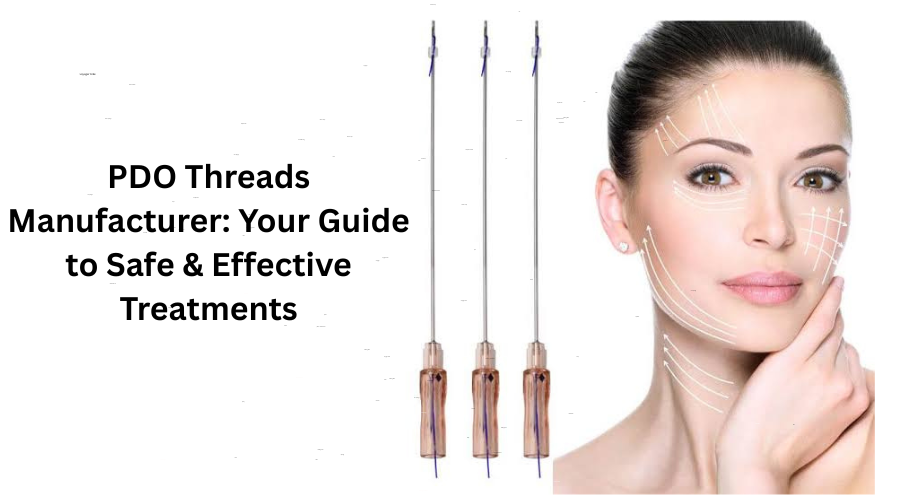
PDO threads appear very basic: a thin absorbable strand inside a needle or cannula. However, the difference between a high-quality thread and a low-quality thread is great. This difference shows up in patient comfort, lift quality, and complications. The manufacturer is the first safety check when purchasing for a clinic or distributing for a clinic. This guide includes what to look for, questions to ask, and what to avoid.
A genuine manufacturer is responsible for the entire process. It provides medical-grade polydioxanone, extrudes the filament, cuts or molds the barbs, attaches the needle, packs the product, and sterilizes it. Every step will impact the last thread. Certain firms only assemble. They purchase filament from outside and add needles. That can still work. However, it is important to understand which one you're working with. Ask what's extruding the polymer and where. The next step is the answer: who controls quality.
Begin with the paperwork. Look for ISO 13485:2016, the quality standard for medical device manufacturers. Then check for the CE mark under the EU Medical Device Regulation. If it is a product made in the US, ask if it is FDA approved. Most PDO threads sold are not; read the labels carefully. Check all certificate numbers with issuing organization. Scans can be forged. By the way, look at the scope line. A certificate for ‘cosmetic products’ would not apply to sterile medical devices. Customs cares about little gaps like that. They care if there is a problem with a patient.
Mono threads are simple and plain threads. They help improve skin texture and stimulate collagen. They do not lift. They are used in clinics for fine lines, neck wrinkles, and under-eye skin. Cog threads feature barbs on the strands. The barbs grip tissue and hold it in place. Ask how the barbs are made. Cut barbs are also common. The molded barbs are stronger and more secure to hold under tension. Twin or spiral threads are also screw threads that give volume to hollow parts such as temples.
Specifications vary according to treatment. Thread length ranges from 25 mm to 50 mm for mono threads and from 60 mm to 100 mm for cog threads, which cover a larger area but require more skill to place. Needle quality is often overlooked. Inexpensive needles quickly wear out and spread through paper. That means bruising and more pain. Find out what type of steel the needle is and how it stays sharp on multiple passes. Cannulas should have a smooth tip. A rough tip can tear small vessels.
Verify ISO 13485 and CE certificate yourself with the certificate issuer. Request a factory audit report, batch test records, and references from local customers. Order a sample before any bulk purchase.
PDO threads must be sterile. Ethylene oxide . Known as EO . Most manufacturers use this . Gamma irradiation is less commonly used, since it can degrade the polymer. Ask the factory how they did it and ask for a validation report. It should demonstrate a sterility assurance level of 10-6. And residue counts. EO leaves traces if the product is not aerated long enough. request the EO residual test result. Each batch must carry the manufacture date, lot number and expiration date. Shelf life is about 2 to 3 years. If there is no expiration date, this is a red flag.
PDO is absorbed in the body within approximately 6-8 months. That is when tensile strength will continue to decrease. Quality threads may have a meaningful holding strength in the first few weeks until it works the mechanical lift. Request the tensile quality information from the producer; typically, that is listed as knot pull strength in newtons. When placed, the weaker threads break. This is wasteful and may leave behind a residue of tissue. A factory checks samples from each batch and writes the numbers in the sample records. If a supplier can't provide you with an individual tensile figure, then presume they are unaware of it.
Poor extrusion can result in uneven filament thickness. The weak barbs can penetrate the skin. Product contamination can increase infection risk. The manufacturing process minimizes all three issues before the thread reaches the patient.
The price fluctuates based on variety and quantity. Mono threads can be purchased wholesale for $0.30 to $1.50 per piece. Generally, cog threads cost $2 to $8 per piece. Screw and specialty threads cost more. Don't expect less than tiered pricing: discounts of 10–20% are typical for 1,000+ pieces. MOQ depends on the level of customization you wish for. A trial order of 100 to 500 pieces may be ordered for stock products. The price for Private label with custom packaging typically begins at 1,000 to 5,000 units. Lead time for stock runs about 1 to 3 weeks. Custom orders are shipped 4-8 weeks after your order is received.
Many manufacturers offer OEM service. You choose the thread size and brand, and the branding is all yours. The factory prints your logo on the box and the instructions for use. Inquire about the ownership agreement and product registration. Include it in the contract. Go over the regulatory side also. When selling under your own brand name, you might be the legal manufacturer of record in certain markets. That comes with paperwork and responsibilities. Consult a regulatory adviser in your state or country before signing. This is an easy task to do and will avoid costly issues in the long run.
A good manufacturer will respond to questions within 24 hours. They provide training videos, placement guidance, and technical sheets. They conduct training courses for injectors. Some provide just a price list and a shipping label. Inquire about complaint procedures. A good factory records every complaint, explores the lot, and responds in writing. Request a replacement policy if the product is defective. Ask how long they keep batch records. A medical device normally has a lifetime of five to ten years. If your supplier ignores these queries, you can rest assured that your problems won't be taken seriously either.
PDO thread manufacturers can gain your trust by showing their work. Certificates that can be verified. Read Test Data: Sterilization reports that can be viewed. These are followed by Price. Send for a sample; conduct an audit during large orders; record all batch records. Safe treatments begin before the needle even touches the skin! They start at the factory.
What are the bulk PDO thread manufacturers for clinics and distributors?
Bulk orders are supplied from certified factories, which are ISO 13485 and CE certified, and their initial order quantities begin at 500 to 1,000 pieces per type.
What is the wholesale price of PDO threads?
The wholesale price per unit for mono threads ranges from $0.30 to $1.50, and for cog threads, it is between $2.00 and $8.00.
Who is a custom manufacturer of PDO threads with private label options?
OEM manufacturers provide custom packaging, logos, and specifications; usually, they have MOQs ranging from 1,000 to 5,000.
Who offers bulk PDO threads with customization at discounted rates?
Many factories offer a significant discount (usually 10% - 20%) on custom bulk orders for quantities over 1000.
What is the production and delivery time for PDO threads?
Stock items ship in 1 to 3 weeks. Custom runs require 4-8 weeks plus shipping time.
Highlights A good manufacturer of PDO thread
READ FULLHighlights -BOTOX is not a filler; it's a purified form of Botulinum toxin type A.
READ FULLHighlights -PDO threads are absorbable sutu
READ FULL